
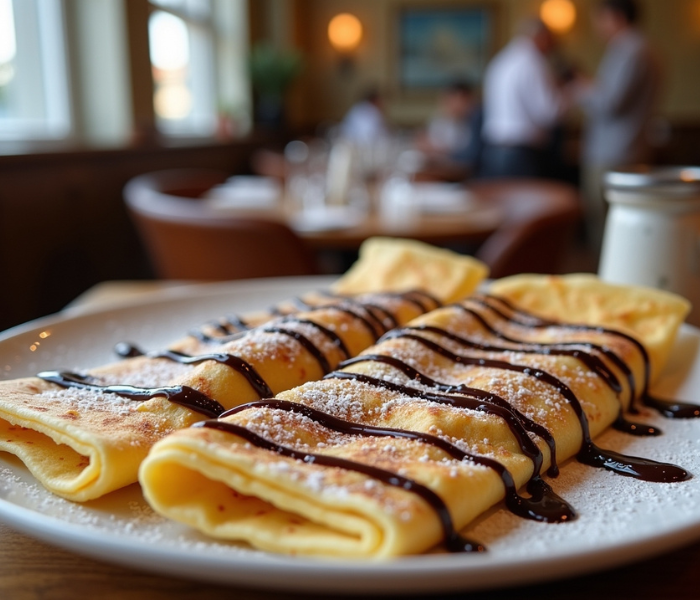
Every year on the 2nd of February, kitchens across France fill with the smell of freshly made crêpes. This much-loved tradition is known as La Chandeleur, often nicknamed crêpe day in France, but its origins go far beyond a simple excuse to enjoy pancakes.
What Is La Chandeleur?
La Chandeleur, also known as Candlemas, is an ancient festival celebrated in France on February 2nd, exactly 40 days after Christmas.
The name Chandeleur comes from the Latin word candela, meaning candle. Light plays a central role in the festival, both historically and symbolically.
Pagan Origins: Celebrating the Return of Light
Long before Christianity, Candlemas existed as a pagan festival linked to the changing seasons.
In Roman times, people marked the end of winter by carrying torches and candles through the streets. These rituals symbolised:
- The return of longer days
- The hope of spring
- Prosperity for the year ahead
Light was believed to chase away darkness, bad luck, and harsh winter energy, themes that still quietly shape the celebration today.
Christian Meaning of Candlemas
Later, the Christian Church adapted the festival into the Feast of the Presentation of Jesus at the Temple, which takes place forty days after Christmas.
On this day:
- Candles were blessed
- Processions were held
- Light symbolised purity, protection, and faith
This religious transformation is what firmly established the name La Chandeleur in French culture.
Why Do the French Eat Crêpes on La Chandeleur?
The tradition of making crêpes is thought to date back to the Middle Ages.
Crepes were not chosen at random; their round shape and golden colour are said to represent the sun, linking back to ancient beliefs about light, renewal, and abundance.
Crêpes were also practical: made from simple ingredients that households already had, they were accessible to everyone.
Candlemas Superstitions and Good-Luck Traditions
La Chandeleur comes with its fair share of charming French folklore.
Flipping the Crêpe for Prosperity
One of the best-known traditions says that:
- You should flip the first crêpe while holding a coin in your hand
- Doing so is believed to bring good luck and financial prosperity for the coming year
The Crêpe on the Cupboard
In some rural regions of France, there was an old belief that:
- The first crêpe should be placed on top of a cupboard
- If it stayed there without falling, the household would enjoy a successful harvest and good fortune
Today, this is mostly remembered as a fun tradition rather than something taken literally.
How La Chandeleur Is Celebrated in France Today
While La Chandeleur still holds religious meaning for some, it is now largely a warm, social celebration.
Across France, including here in the Dordogne, families and friends:
- Gather to make crêpes together
- Enjoy both sweet and savoury fillings
- Pass down recipes and traditions
From classic sugar and lemon to Nutella, jam, or ham and cheese, there’s no wrong way to celebrate, as long as crêpes are involved.
La Chandeleur in Everyday French Life
What makes La Chandeleur special is its simplicity. It’s not a public holiday, but it remains deeply rooted in French culture.
It’s a moment to:
- Slow down during winter
- Share food and laughter
- Celebrate traditions that have lasted for centuries
And perhaps most importantly, it’s a reminder that sometimes the best traditions are the simplest ones.


