Why Bilingual Learning Matters in the Dordogne
Living in the Dordogne often means embracing a beautifully bilingual lifestyle. Whether you’ve moved here permanently, split your time between countries, or are simply encouraging your children to learn French, finding ways to make language learning feel natural rather than forced can make all the difference. For many families, especially those with younger children, traditional learning methods can feel too structured, which is why more creative approaches are often the most effective.
A Creative Approach to Learning Through Colouring
One option we’ve recently come across is the range of bilingual colouring books from Learn & Colour Publishing. Rather than presenting language learning as something formal or academic, these books take a much softer approach, combining simple illustrations with everyday vocabulary in both English and French. The result feels more like play than learning, which, for children, is often exactly where the magic happens.
Colouring is already a familiar and calming activity for most children, so introducing language alongside it feels seamless. As they colour in each page, they naturally begin to associate words with images, seeing both the English and French terms side by side. Over time, this kind of gentle repetition helps build recognition and confidence without any pressure to memorise or perform. It’s particularly helpful for children who may be navigating two languages in their daily lives, whether at school, at home, or out and about in their local community.
A Closer Look at the Learn & Colour Publishing Books
The Learn & Colour Publishing collection includes a variety of themed books, each designed to reflect moments and experiences children already understand.
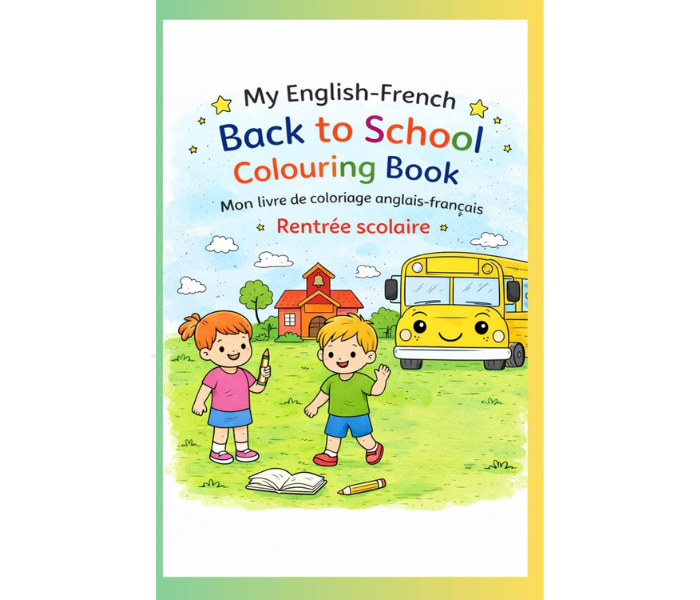
Back to School English-French Colouring Book
The Back to School edition, for example, introduces familiar classroom vocabulary, which can be especially reassuring for children starting or attending school in France. Seeing words like “teacher,” “desk,” and “pencil” presented in both languages can help bridge the gap between home and school life in a very accessible way.

Easter English-French Colouring Book
Seasonal titles add another layer of engagement, bringing in vocabulary linked to celebrations throughout the year. The Easter colouring book is light, cheerful, and perfect for springtime, offering children a chance to explore themed words while enjoying a creative activity during the holidays. It’s the kind of book that works just as well at home as it does tucked into a bag for a café trip or long journey.
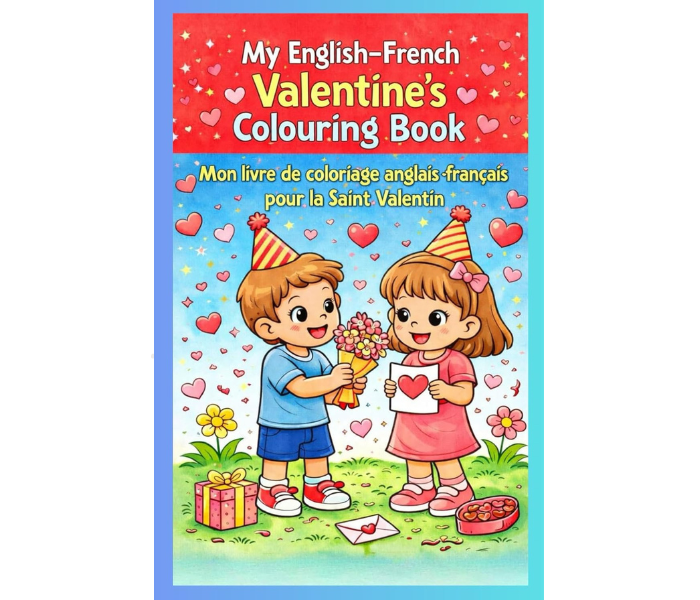
Valentine’s English-French Colouring Book
The Valentine’s edition follows a similar approach, focusing on simple, positive words connected to love, friendship, and kindness. It’s a gentle way to introduce emotional vocabulary in both languages, which can often be just as important as practical, everyday terms. The illustrations remain easy and approachable, making it suitable for younger children who may still be developing their fine motor skills as well as their language abilities.

Christmas Bilingual Colouring Book
For the festive season, the Christmas bilingual colouring book offers a cosy and familiar set of words that children are likely to hear and use during winter. It’s particularly useful for families celebrating Christmas in France, where traditions and language may differ slightly from what children are used to. Having those words presented visually can help them feel more included and confident during the season.
What stands out across the entire range is the simplicity. These books don’t try to overwhelm children with too much information or overly detailed explanations. Instead, they focus on clear visuals and straightforward vocabulary, allowing children to absorb language at their own pace. This makes them especially useful for younger age groups, but they can also work well for slightly older children who are just beginning to engage with French in a more meaningful way.
Why These Books Work So Well for Bilingual Families
For families in the Dordogne, resources like this can be particularly valuable. Daily life here often involves a mix of languages, from chatting with neighbours to navigating local markets or attending school. Having something that gently reinforces vocabulary in a relaxed setting can help children feel more at ease in those situations. It also creates opportunities for parents to join in, whether that’s reading the words together, practising pronunciation, or simply talking about the images on the page.
A Screen-Free Way to Support Language Learning
Another benefit is that these books offer a screen-free alternative that still feels engaging. In a world where so much learning is digital, there’s something refreshing about a simple activity that encourages children to slow down, focus, and create. It’s easy to take them anywhere; they don’t require batteries or Wi-Fi, and they can be revisited again and again.
Overall, the Learn & Colour Publishing bilingual colouring books feel like a thoughtful and practical addition to any child’s learning environment. They won’t replace formal language learning, but they’re not designed to. Instead, they complement it, offering a relaxed and enjoyable way to build familiarity with both English and French over time.
If you’re looking for a simple, creative way to support your child’s bilingual journey, especially while living in or visiting France, these books are well worth exploring.
Giveaway
For your chance to win the full set of books, enter below
Win a set of Bilingual Colouring Books