There are so many villages and towns to visit in Dordogne, and you can’t go wrong with any of them in the region. These are a few of the best villages and towns in Dordogne, just to get you started.

Brantome
Brantome, the idyllic village dubbed the “Venice of the Perigord” located in the Perigord Vert. Explore its enchanting medieval and renaissance architecture, starting with the iconic Brantome Abbey, home to troglodyte caves like the famed “Last Judgment”. Enjoy a stroll or hire a canoe to discover Brantome from the river – a tranquil sightseeing experience! Don’t miss out on the Les Jardins Tranquille garden, and treat yourself to souvenirs from the local glass-blowing factory, where you can observe the whole process.
Sarlat-la-Canéda
Sarlat-la-Canéda is a renowned medieval town in Dordogne that attracts much attention and is frequently photographed. It is well-known for its impressive architecture, delicious food, and rich history. Situated slightly to the north of the Dordogne River, Sarlat is believed to have emerged around the 11th century, and numerous buildings that still exist today date back to the 14th, 15th, and 16th centuries. It is a dream destination for lovers of history while offering an abundance of restaurants and gourmet shops for food enthusiasts.
Bordeilles
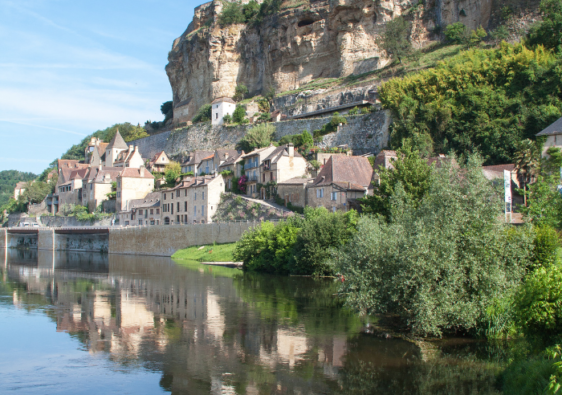
Hidden in the countryside lies the picture-perfect village of Bourdeilles, located on the majestic River Dronne. Tourists flock here to admire its unique 14th-century bridge, lovingly renovated following flooding, which provides stunning views of the town centre and its classic chateau perched atop the hill. Make sure to bring comfortable shoes for the cobblestone walkway to fully appreciate the gorgeous river views from the castle!

Beynac and Cazenac
Beynac and Cazenac offers an unforgettable experience for visitors to the Dordogne Valley. Home to the beautiful 12th-century Château de Beynac, this picturesque village is a paradise for sightseers and photographers alike. From its flower-covered houses to its stunning river views and scenic harbour, Beynac and Cazenac is a must-see destination for all tourists.
Monpazier
Monpazier, considered one of the most stunning towns in the southwest of France and recognised as one of the most beautiful villages in the country, is a haven for history enthusiasts. The town has remained virtually unchanged since it was established in 1284.
The small number of recently-opened coffee shops and stylish shops complement the historic buildings flawlessly, serving as an ideal place to appreciate the sights of the town’s central square.
The Bastideum Museum in the former convent building on the main square is a must-visit attraction where you can explore the history of Monpazier, its unique architecture, and significant historical moments and get a glimpse of what life was like during the Middle Ages.
St-Amand-de-Coly
Discover the beauty and history of St-Amand-de-Coly, a charming Dordogne village part of Les Plus Beaux Villages de France. Explore the ruins of the fortified church, bell tower, and 6th-century abbey, now a venue for summer concerts. Named after a hermit called Saint Amand, who lived in a cave near the village, St-Amand-de-Coly is a hidden gem not to be missed.
Issigeac
This quaint medieval village has a history dating back to Roman times and is situated approximately 20km from Bergerac. The town centre is adorned with breathtaking ancient architecture, constructed in a circular layout. Numerous buildings from the 13th to 18th century, boasting great historical significance, have been meticulously preserved.
Issigiac is recognized as one of the top markets in Nouvelle Aquitaine, and every Sunday, many individuals make their way there to experience the lively market atmosphere. Turning from a typically tranquil village, Issigeac becomes a vibrant marketplace where you can shop, sample food, discover new things, and observe people.

Aubeterre-Sur-Dronne
Voted one of the most beautiful villages in France for many years in a row, the charming town of Aubeterre-sur-dronne is actually part of the Charente department but well worth a visit if you are in North Dordogne. It boasts impressive historical landmarks and picturesque streets and alleys to explore on foot. Stop by the underground Church of St Jean and the Romanesque Church of St Jacques for a glimpse of stunning architecture, then meander down the village’s narrow lanes to browse the shops and enjoy a meal at one of its fantastic restaurants. Before you leave, you mustn’t forget to walk up the hill to savour a spectacular view!
Domme
Travel back in time to 1281 and explore Domme’s charming, honey-coloured village atop a hill overlooking the Dordogne River. Discover the unique Lauze-style rooftops while uncovering Domme’s fascinating history. The town, founded by King Philip the Bold in 1281, has ancient caves in the city centre that once shielded villagers during sieges. Today, the caves serve as a museum, making Domme a must-visit destination for tourists eager to explore the past.
La Roque-Gageac
Immerse yourself in the majesty of La Roque-Gageac, one of France’s most picturesque villages. Perched on the north bank of the Dordogne River and nestled beneath a cliff, this village of golden facades and Perigord roofs has remained unchanged for over 300 years. Explore the Renaissance-style Chateau de la Malartrie grounds 40 metres above the town for incredible views. Get lost in the exotic botanical growth that seemingly covers the entire village, most notably the Manoir de la Tarde.

Perigueux
Explore the rich history of Périgueux, the prefecture of the Dordogne. This modern town developed from two nuclei around 1251 and is now known for its beauty and lively market. Browse the stalls for delicious truffles and foie gras, and visit the stunning Saint-Front cathedral designed by the same architect as the Sacré Coeur in Paris. Take a stroll and discover the Place Saint-Silain, Limogeanne Street, and the Mataguerre Tower – a sightseeing experience you won’t forget!
Limeuil
The picture-perfect village of Limeuil has been a beloved destination for tourists since its status as one of France’s most beautiful villages was recognised in the 1990s.
Adored for its lush landscape created by the meeting of the Vézére and Dordogne Rivers, Limeuil also appeals to water sport enthusiasts. Its original fortifications and charming stone houses with tiled roofs make the town easily recognisable.
Don’t miss the charming English Gardens of Limeuil, which overlook the entire valley and are a great spot for photos. Limeuil is renowned for its craftsmen, so don’t forget to pick up some souvenirs!
Belvès
The village is famous for its exceptional architectural landmarks and breathtaking views of the forests in the valley below.
Indeed, the term Belvès actually translates to ‘lovely vista’ in the Occitan language, which was previously spoken in the area. This picturesque village provides a scenic view of the Nauze stream and is occasionally known as the ‘Town of Seven Bell Towers’.
The tourist office in Belves provides guided tours of the town and also offers booklets that offer an entertaining way for families to explore the village.
The town has several historical landmarks worth visiting and will give you a glimpse of the Middle Ages. These include le Chateau de Belvès (Hôtel de Commarque), a castle from the 13th century, a church called Notre-Dame-de-l’Assomption also from the 13th century, and a tower known as Tour des Filhols, also dating back to the 13th century.
Belves offers an impressive attraction, the covered market from the 15th century, which can be found in the central square named Place des Armes. Saturday mornings are especially vibrant as the market is bustling with activity, offering a variety of fresh produce like bread, vegetables, nuts, and cheeses.
Saint-Jean-de-Côle
The town is named Saint Amand, a 6th-century hermit who resided in a hillside cave.
The abbey church originates from the 12th century, and adjacent to it are the abbey’s remains. During the 14th century, the church was transformed into a fortress; however, it still retains its original beauty as a Romanesque church with minimalistic design both inside and out. The defensive features of the church consist of thick walls, openings for archers, and deceptive staircases intended to confuse potential attackers and lead them to dead ends.
In the heart of the village, you can find the remains of the church and abbey. If you go towards the right, you will come across the village’s tourist office and a stunningly renovated tobacco barn that now offers regional products for sale.
The majority of the structures in the village are constructed with charming local yellow stone, and their roofs are either made of grey slate tiles or grey lauze stone.