
Best Books on the French Revolution: Essential Reads for Understanding Revolutionary France
The French Revolution remains one of European history’s most transformative and controversial periods. It toppled the ancien régime, with its entrenched privileges and estates system, and set the foundation for modern democratic institutions and ideals of political freedom. The complexity of choosing the right books to study this pivotal era can be overwhelming. Whether you’re looking to understand the origins of the French Revolution, the roles of significant figures like Maximilien Robespierre and Marie Antoinette, or want to explore the struggles of ordinary people, these essential readings will provide a comprehensive starting point.

The Coming of the French Revolution by Georges Lefebvre
A classic work often regarded as the best introduction to the Revolution’s beginnings, Lefebvre’s book delves into the causes of that insurrection. Written on the eve of the Second World War, Lefebvre’s analysis of the Great Fear, the Estates General, and the rural panic gives readers a nuanced view of how various classes, from peasants to the bourgeoisie, contributed to the Revolution’s eruption. His concise intellectual biography emphasises the class struggles that defined the period. This Princeton Classics Edition includes a critical appraisal by twentieth-century historians, making it a must-read for serious students of the French state.

The French Revolution: From Enlightenment to Tyranny by Ian Davidson
This new history of the French Revolution offers a scholarly yet accessible account that connects the Revolution’s lofty ideals of equal justice and human rights to the violent political events that led to a powerful dictatorship under Napoleon Bonaparte. Davidson’s work captures how the Revolution’s philosophy of equality transitioned into the Reign of Terror and beyond. For readers interested in a well-rounded overview, this book provides a chronicle of the French Revolution that balances a discussion of high politics with the experiences of common people.
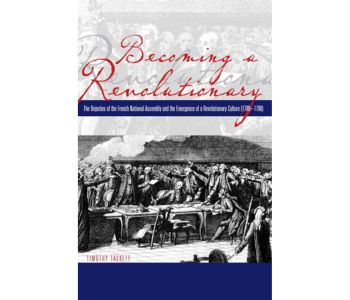
Becoming a Revolutionary by Timothy Tackett
Timothy Tackett’s work is a deep dive into the lives of ordinary French citizens. It offers brilliant insights into how educated members of the Third Estate became revolutionaries. Tackett explores the formation of the modern world through the experiences of these men, emphasising the importance of intellectual transformation. For those curious about the social revolution and the political events of revolutionary Paris, this book provides a rich narrative filled with primary sources and first-hand accounts.

The Great Nation: France from Louis XV to Napoleon by Colin Jones
Jones’s book serves as a comprehensive history of the Revolution, covering everything from the fall of the monarchy to the rise of Napoleon Bonaparte. Paying particular attention to how French society evolved from a deeply stratified state under the ancien régime to a society grappling with concepts of citizenship, rights of man, and democratic institutions, Jones’s narrative is indispensable for understanding the various classes and their role in shaping Revolutionary France.
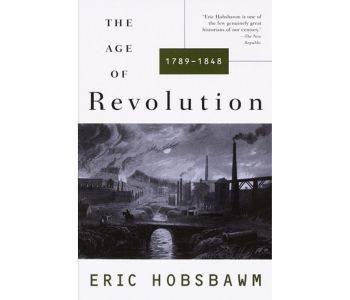
The Age of Revolution: 1789-1848 by Eric Hobsbawm
Hobsbawm’s Marxist approach frames the French Revolution within the broader Age of Revolutions, examining how its outcomes reverberated across Europe and the United States. This study of the French Revolution emphasises its role in the formation of the modern world, highlighting the pivotal role of class struggles and the impact on both French citizens and international political freedom movements. It’s a compelling read for those interested in the Revolution’s global implications.

Marie Antoinette: The Journey by Antonia Fraser
For those looking to explore the personal stories behind the Revolution, Fraser’s biography of Marie Antoinette provides a sympathetic portrayal of the Queen who came to symbolise the decadence of the ancien régime. This work captures the fall of the monarchy and the Queen’s tragic end with particular attention to her role in shaping public perceptions of the monarchy. Fraser’s narrative, filled with primary sources, is an intimate biography and a social history of the Revolution’s impact on women and the monarchy.

Twelve Who Ruled by R. R. Palmer
A concise classic that explores the Reign of Terror, Palmer’s book focuses on the twelve men who formed the Committee of Public Safety, including Robespierre. Palmer, a professor emeritus of history, provides a critical appraisal of how these men justified terror in the name of political freedom and equal justice. For readers seeking an analysis centred on key revolutionary leaders, this English translation remains essential reading.
Olympe de Gouges: The French Revolution’s Forgotten Feminist by Joan Wallach Scott
Scott’s book brings to light the contributions of women of the French Revolution, particularly Olympe de Gouges, the author of the Declaration of the Rights of Woman and the Female Citizen. This work explores the social revolution from a gendered perspective, making it an excellent complement to more traditional narratives focused on male political leaders. Readers will gain a deeper understanding of how women challenged the new era of democratic institutions and civil rights.
French Revolution books for children
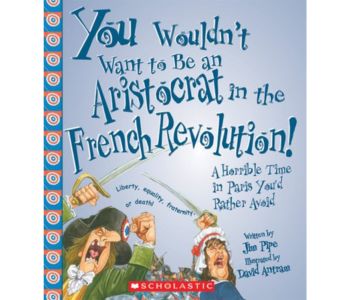
You Wouldn’t Want to Be an Aristocrat in the French Revolution! by Jim Pipe
This is a fun and engaging book that uses humour and visuals to show what life was like for nobles facing the guillotine. The “You Wouldn’t Want to Be…” series makes history relatable and entertaining.

Horrible Histories Special: France by Terry Deary
The Horrible History of France uncovers the shocking realities of the rebellious and revolutionary French, covering everything from the grim days of the Dark Ages to the bloodshed of the 19th century. Ever wondered which king believed he was made entirely of glass? Or why French bread used to be baked with crushed tiles and bricks? Discover how to play hopscotch like a highway robber in France! Explore the bizarre lives of peculiar kings, eccentric queens, and ruthless rulers—and learn about the rebels who had them executed, decapitated, or dispatched when they’d had enough. Explore France’s ghastly famines, spine-chilling reigns of terror, and the horrifying history of the guillotine. History has never been so gruesome!

A Tale of Two Cities by Charles Dickens
This is an abridged version of Dickens’s classic novel that focuses on the themes of love, sacrifice, and revolution. It’s a great introduction to the historical backdrop of the French Revolution through gripping storytelling.

The Red Necklace by Sally Gardner
This historical novel is set in Paris during the Revolution. It features a young boy named Yann who becomes entangled in the political chaos. It’s a gripping story that blends history with elements of mystery and adventure.
These books are just a few highlights of the rich historical scholarship on the French Revolution. From the origins of this great turning point to its culmination under Napoleon, these works offer brilliant insights and serve as a starting point for anyone eager to explore the history of the Revolution in depth.
You might also like
Incredible fictional books set in Dordogne


